
Best Accounting Software for Singapore Small Businesses (2026)
The best accounting software for Singapore SMEs in 2026, compared: Xero, QuickBooks, Zoho, Financio, and what InvoiceNow means for your choice.
Last updated:
September 30, 2026
Ask ten Singapore founders which accounting software is best and you may get several different answers. How do you choose which is best for your company? In 2026, the useful question is more precise: which software keeps you compliant with Singapore's GST and e-invoicing rules, connects to your bank, and grows with you without charging extra for every person who logs in?
At Harvest we run every client on Xero, and we'll show you why. This is a fair comparison, so we'll look at the real alternatives too. We'll run through QuickBooks, Zoho Books, Financio, and Odoo, and where each one fits or falls short for a Singapore business. One 2026 change reshapes the decision for everyone: InvoiceNow. We'll start there.
What "best" actually means for a Singapore business
The best accounting software for a Singapore SME is the one that files your GST correctly, is ready for InvoiceNow e-invoicing, connects to your local bank, and doesn't charge you for adding staff. Global feature lists matter, but local fit is crucial. A tool can be excellent in the US and still leave you keying in bank transactions by hand here, because it doesn't connect to our local banks.
The 2026 change that decides this: InvoiceNow
Singapore is moving to mandatory e-invoicing through the InvoiceNow (Peppol) network, and the timeline now reaches every GST-registered business. Pick software that already supports InvoiceNow. For 2026, this belongs at the top of your checklist.
Here's the rollout IRAS has confirmed:
- From 1 November 2025: newly incorporated companies that register for GST voluntarily within six months of incorporation.
- From 1 April 2026: all new voluntary GST registrants, whatever their incorporation date or business structure.
- From 1 April 2028: new compulsory GST registrants, and existing GST-registered businesses with annual supplies up to S$200,000.
- From 1 April 2029: existing GST-registered businesses with annual supplies up to S$1 million.
- From 1 April 2030: those with annual supplies up to S$4 million.
- From 1 April 2031: those above S$4 million.
IRAS also lets SMEs use free InvoiceNow-Ready solutions until March 2031, with transitional funding of up to S$1,000 to help cover onboarding (IRAS, GST InvoiceNow requirement).
What to look for in 2026
Beyond InvoiceNow, five things separate software that works in Singapore from a general accounting package:
- GST F5 filing. Singapore's GST rate is 9%. Good software tracks it on every transaction and generates your quarterly F5 return ready for IRAS, so filing is a review rather than a rebuild. This matters most once you cross the S$1 million threshold and register for GST.
- Bank feeds and payment connections. DBS, OCBC, and UOB feed directly into Xero, and so do business accounts like Aspire, Wise, and Airwallex, so transactions land automatically instead of being keyed in. Payment platforms matter just as much: Stripe, GoCardless, PayPal, and Airwallex push your sales and their fees into Xero, so your online takings reconcile themselves. Not every digital bank has a Xero feed though, so it's worth checking before you open one. Our guide to the best corporate bank accounts in Singapore covers which connect cleanly.
- Unlimited users. Some tools charge per user. Once you, your bookkeeper, and your accountant all need access, per-seat pricing adds up fast.
- Grant eligibility. The EDGE grant (which replaced the Productivity Solutions Grant on 30 September 2026) covers up to 50% of qualifying setup costs for pre-approved solutions. Not every tool qualifies.
- An accountant ecosystem. The software is only half the job. A tool your accountant already knows deeply is a real advantage.
Xero, and the honest alternatives
The InvoiceNow column reflects IMDA's InvoiceNow-Ready Solution Provider list (updated 17 August 2026); "add-on" means the tool isn't on that list, so you'd connect it through a separate Access Point. Prices are indicative, so confirm the current figure on each vendor's Singapore page.
| Software | From (SGD/month) | GST F5 | InvoiceNow | DBS/OCBC/UOB feeds | Unlimited users | EDGE grant | Best for |
|---|---|---|---|---|---|---|---|
| Xero | ~S$39 | Yes | Yes | All three | Yes | Yes | Most SG SMEs; accountant-run books |
| QuickBooks Online | ~S$30 | Yes | Via add-on | DBS mainly | No (1 to 5) | Limited | Businesses tied to the Intuit ecosystem |
| Zoho Books | Free / ~S$15 | Yes | Via add-on | Limited | No (tiered) | No | Micro and budget-conscious founders |
| Financio | ~S$20 | Yes | Yes | Limited | Yes | Check vendor | Low-cost, compliance-first, local |
| Odoo | Free / from ~S$18/user | Yes | Yes (via partner) | Limited | No (per user) | Via partner | Businesses wanting a full ERP, not just accounting |
| Wave | Free | No | No | No | Yes | No | Not built for Singapore compliance |
Xero: our pick, and the market default
Xero handles Singapore GST and InvoiceNow (through its built-in Invoici service, and here's how to set InvoiceNow up in Xero), connects to DBS, OCBC, and UOB, and includes unlimited users on every plan. Its Singapore plans start from about S$39 a month (Starter), with Standard and Premium tiers above that for multi-currency and higher volumes. It's a pre-approved solution for the EDGE grant, and it has by far the largest network of Singapore accountants who know it inside out. For a deeper look at what it does locally, see our full Xero guide for Singapore small businesses.
QuickBooks Online: capable, weaker locally
A capable global tool that handles GST. It isn't on IMDA's InvoiceNow-Ready list though, so InvoiceNow needs a separate Access Point rather than a built-in connection, and for a Singapore business the other trade-offs are real: bank feeds are strongest with DBS and patchier with OCBC and UOB, plans cap users at one to five depending on tier, and its local accountant network is smaller than Xero's. A reasonable choice if you're already in the Intuit ecosystem, less so if you bank with OCBC or UOB.
Zoho Books: value for micro-businesses
Zoho Books has a free tier for the smallest businesses and a low monthly cost above that. It's GST-compliant, but like QuickBooks it isn't on IMDA's InvoiceNow-Ready list, so you'd need a separate Access Point to connect it to InvoiceNow, and it sits outside the pre-approved grant route most SMEs use. A good choice for a solo founder watching every dollar; lighter on the local accountant ecosystem if you later want a firm to take over.
Financio: the Singapore-native budget option
Financio is built locally with GST and InvoiceNow in mind, includes unlimited users, and starts from around S$20 a month. A good choice if you want a low-cost, compliance-first tool and don't need Xero's app ecosystem or partner network.
Odoo: the all-in-one ERP option
Odoo isn't a pure accounting tool. It's a modular ERP where accounting is one app among many, next to inventory, manufacturing, CRM, ecommerce, point of sale, and HR. You can start free on a single app, then pay from around S$18 per user per month as you add more. Its accounting can be configured for Singapore GST and the F5 return. It suits businesses that have stock, purchasing, a warehouse, a factory floor, or multichannel sales. For a service business or others that don't need stock management, it has a steeper learning curve than Xero.
Wave, FreshBooks, and the rest
Capable tools in their home markets, but they aren't built for Singapore GST or InvoiceNow. For a Singapore business that has to file here, we'd point you elsewhere.
Beyond compliance: what Xero does day to day
Compliance is the starting point. Where you actually spend your time is the day-to-day: sending invoices, chasing payments, reconciling the bank, and understanding your numbers. Xero's feature set is built around that, and it runs broader than most SME tools.
Getting paid: online invoicing with automated reminders, professional quotes, and card, debit, or direct-debit payments so a customer can pay you straight from the invoice.
Keeping the books current: automatic bank feeds from more than 21,000 institutions worldwide, including DBS, OCBC, and UOB, with much of the reconciliation done for you, plus bills and accounts payable, and receipt and expense capture.
Seeing the business clearly: real-time reporting you can share with your accountant, an accounting dashboard, cash-flow analytics, and JAX, Xero's AI assistant (in beta), for quick answers about your numbers.
Growing into it: inventory, project and job tracking, purchase orders, multi-currency, fixed-asset management, basic payroll, and the Xero App Store for add-ons from rostering to point of sale.
Two things stand out against the field. Every Xero plan includes unlimited users, so your bookkeeper and accountant never add to the bill, where QuickBooks and Zoho charge by seat. And the Xero App Store is one of the largest app ecosystems in accounting, far deeper than the local or budget tools here, so the software grows with the business rather than boxing it in. The budget options cover invoicing, reconciliation, and GST well enough; they thin out on analytics, projects, inventory, and integrations.
One workflow from that ecosystem we set up for clients and run ourselves: Airwallex Bill Pay with Xero. You approve a bill in Xero, it's synced to Airwallex, ready for payment. The approval and payment data then sync back to Xero both ways, so the bill is marked paid and ready to reconcile, and there's a guard against paying it twice. This removes a manual, error-prone step out of every month.
Why we run every client on Xero
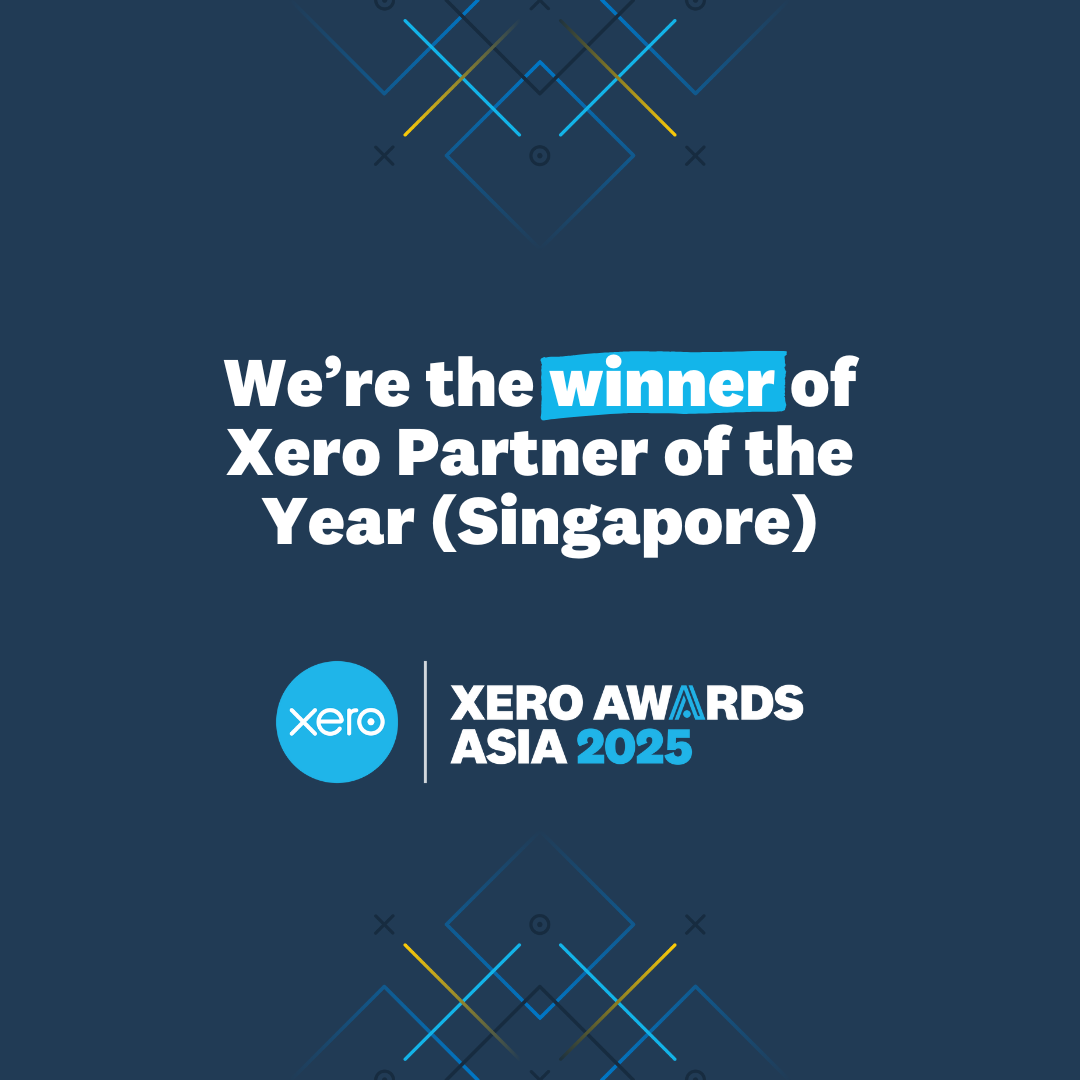
We're a Xero Platinum Partner and the 2025 Xero Partner of the Year for Singapore, so we're not neutral. We chose Xero long before any of that though, for reasons that still hold: Singapore GST and InvoiceNow, bank feeds to all three local banks, unlimited users, and the large number of Singapore accountants who run it every day.
That last point is important. Xero is only as good as its setup. If your chart of accounts built wrong, or GST coded inconsistently, it produces incorrect reports. Setting it up properly and running it is exactly what our Xero service does. If you'd rather keep the software and hand over the monthly work, that's our bookkeeping service.
Frequently asked questions
What is the best accounting software for a small business in Singapore? For most Singapore SMEs, Xero is the strongest all-round choice: it files GST at 9%, supports InvoiceNow, connects to DBS, OCBC, and UOB, includes unlimited users, and is eligible for EDGE grant support. Smaller or budget-conscious businesses may prefer Zoho Books or Financio, which cost less but carry lighter local support and a smaller accountant network.
Does my accounting software need to support InvoiceNow? Increasingly, yes. All new voluntary GST registrants must use InvoiceNow from 1 April 2026, and IRAS is extending the requirement to every GST-registered business in stages through April 2031. Choosing InvoiceNow-ready software now means the mandate is a settings change later, not a migration.
How much does accounting software cost in Singapore? Cloud plans for SMEs typically run from around S$15 to S$95 a month, depending on the tool and the tier. Xero's Singapore plans start from about S$39 a month. If you set up through a pre-approved vendor, the EDGE grant can cover up to 50% of qualifying setup costs.
Can I get a grant for accounting software? Yes, for pre-approved solutions. The EDGE grant, which replaced the Productivity Solutions Grant (PSG) on 30 September 2026, covers up to 50% of qualifying costs. Xero is a pre-approved solution and Harvest is a pre-approved vendor, so eligible businesses can claim up to 50% of qualifying Xero setup costs.
Do I still need an accountant if I use good software? The software automates data entry and reporting; it doesn't make judgement calls. You still need someone to code GST correctly, handle IRAS and ACRA compliance, and read what the numbers actually mean. The best outcomes come from good software plus someone who knows how to run it.
Ready to move onto Xero without the setup headache? See how Harvest sets up and runs Xero for Singapore SMEs: fixed monthly fees, grant-supported setup, and no surprises.


XERO AWARD FINALISTS AND WINNERS


Sign up to our monthly "Picks of the Crop" newsletter for the latest accounting and business updates.
80 Robinson Road #08-01, Singapore 068898
+65 8860 9408 | ask@harvestaccounting.com.sg
Harvest Accounting Pte. Ltd. | UEN 201828446N
Registered Office: 14 Robinson Road #08-01A, Singapore 048545
Terms & Conditions, Privacy and Data Protection Policy